Monday, 11 March 2013

Testing Day One – Solitude

We are preparing for our first day with an audience. We are going to run a number of different tests with a number of different groups. Our focuses will be on:

  • The structure
  • Visual and Audial Content
  • Narrative content
We will test based on single user experience and group user experiences.

Below is a number of considerations that we have researched and made before starting our testing.


Testing Day One – Solitude – 12/March/2013


Considerations:

The design of environment and the effects of the setting:

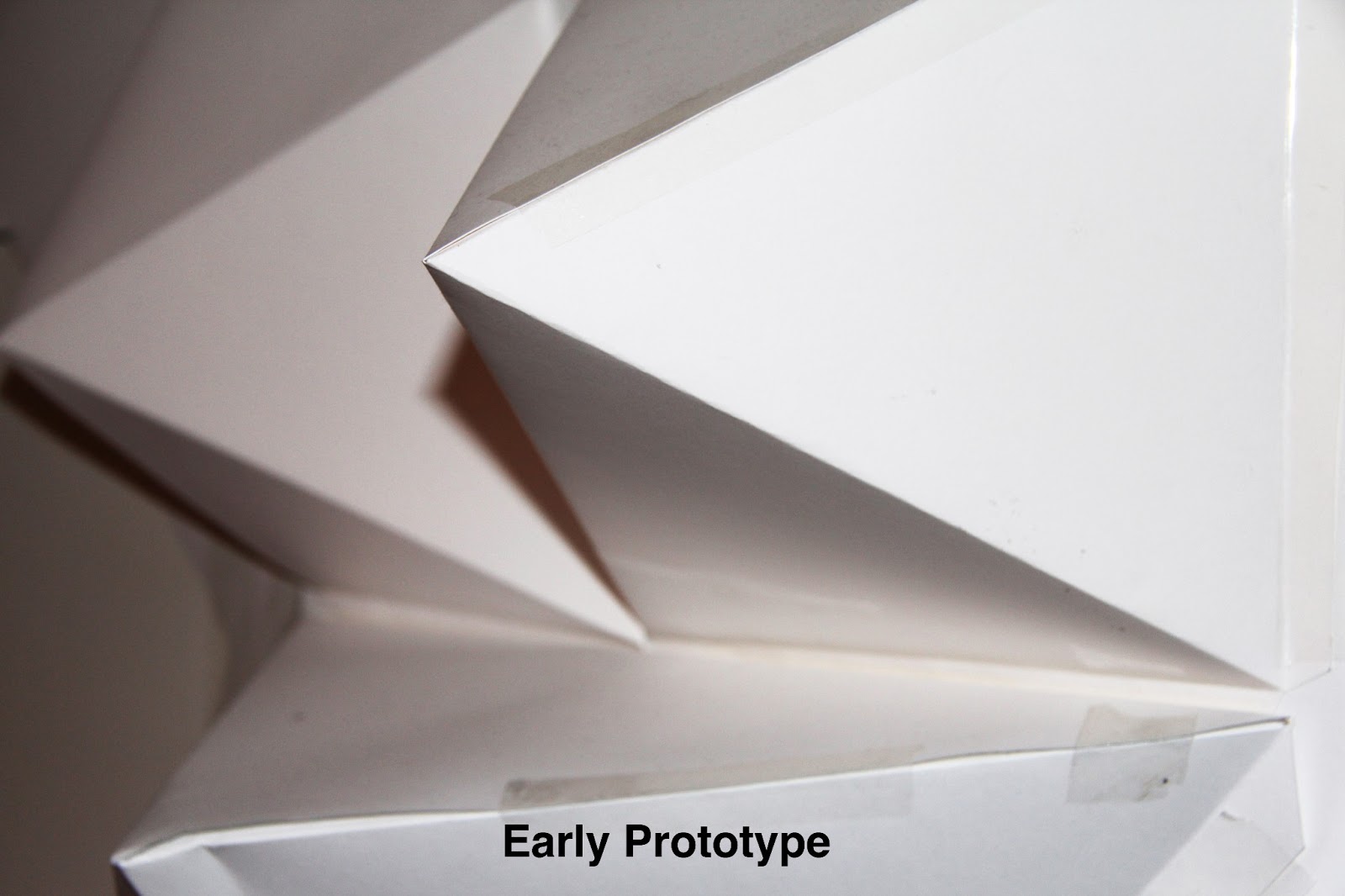
We are testing in the room where the piece will be displayed at the end of the project. We are going to be using a prototype structure so the footage won’t be projected onto the final structure. The prototype structure we are testing on is an old design and is scaled by to 1/5th of the actually size.

Evaluating/assessing the aspects of being directed or left free

During the display of the narrative/visual content the audience will be left free. They will be questioned on their experience

Narrative content

The audience will be asked to rate different narrative symbolic scenarios based on a particular mental illnesses. This will be done on a number basis and will give results that suggest which symbolic scenarios the audience relate to the most.

Coherence, clarity

The audience will be tested on many different areas of the installation from the narrative content to the visual content and the structure itself. This means that the testing won’t be running in the same order as the final piece.

Simplicity/complexity

The audience will be asked about their involvement with the piece based on whether they found it simple to experience or were there any levels of complexity that needs to be taken into consideration.

Aesthetic aspects

The audience will be asked for feedback on both the aesthetics of the footage/sound design and the structure itself.

Social aspects

Testing will be based on both a single user experience and a group experience. In the case of the group experience, we will be monitoring whether the piece causes a debate between any members of the audience

Duration, and involvement in the design experience

The first round of testing will have set durations and the only involvement between the audience and the piece will be experience the visual/audial content and the structure.

(Three levels of testing) - attraction, engagement, experience

Our questions will be structured around these three main areas.

Modalities (sensory experiences)

The impact on the audience’s mood based on their senses

Art as communication (expression)

Has the piece communicated a certain message to the audience, does the audience feel a communication with the prisoners of solitary confinement or the message from the creators of the piece.

Anticipation (anticipatory/reactionary system)

Monitoring the levels of anticipation and any views or reactions evoked in the audience.

Astonishment (aura & kitsch)

Monitoring the audience’s reaction to the visual content being displayed to them.

When (if) does emotional affect happen?

At what point if any does the audience make an emotional connection with the piece.

Wednesday, 6 March 2013

Drawing inspiration from Surrealism

Surrealism is a cultural movement that began in the early 1920s, and is best known for its visual artworks and writings. This phrase "Surrealism" was coined by the french poet Guillaume Apollinaire who used the term 'sur-réaliste' to describe a form of expression that surpasses realism. 

This style of art is something that has inspired a direction to take with regards to the visual narrative produced for "Solitude". The story of solitude focuses a great deal on hallucinations that a prisoner may go through whilst in solitary confinement and also looks at the realms of being asleep or awake. The abstract visuals that are associated with surrealism lend themselves well to our installation because the character in the piece finds it hard to distinguish the difference between what is real and what is a figment of their imagination.


Salvador Dali - The Persistence of Memory


Filmmaker - Luis Buñuel


Surrealism in Film:

Un chien andalou, Luis Buñuel and Salvador Dalí


Un chien andalou, Luis Buñuel and Salvador Dalí


Surrealism in Photography:


References:

Sunday, 3 March 2013

Prototype Testing

Our initial design was produced to a 50% scale from 250 gram white card for testing multiple image and surface projection. As the volume of content being outputted was high latency has become an issue. Testing highlighted the types of shapes that will be suitable for video content to be projected on. We are currently redesigning the structure with this in mind.

Tuesday, 26 February 2013

Paranoia

After completing our storyboards and shot lists we went on our first shoot. The first mental episode we focused on was paranoia. The video below has been edited to recreate the feeling of a paranoid prisoner left in solitary confinement for a long period of time. A fitting soundscape has also been designed.  


Monday, 18 February 2013

Prototype Design HiFi

We are moving on to testing on Hifi prototypes, below is an orthographic projection plan of the prototype currently in production. It has been designed with 14 objects all at the dame height at a scale of 1:10. Out final piece will contain 9 pyramids in total, more have been included in this design to test different surfaces.

Test Edit

Recent developments to Solitude have resulted in the use of nine geometrical shapes to project our content onto.


This development affects the complexity of both the narrative and the edit as now there are potentially nine "screens" to playback the narrative on. This adds a new dynamic to both the narrative and the editing process.

This prototype edit was to test an editing technique that allowed for nine possible playback screens. Each video box on the screen represents one shape of our proposed designed layout. Each box will be mapped to a particular shape. The main focus of this video is the very center box. This box deals with the main narrative of the short mental episode. The other eight complimenting boxes are to add a new dynamic, to help show the further degrading of the mind.

This is the first of several tests that will be taking place, these tests are to help us better understand creating a narrative that potentially has nine playback screens and to test out different editing techniques so we can choose what is most fitting for the project.

Solitude Story Draft 3


First Encounter
A person is being escorted into a prison by two prison guards the sheer size and architecture of the building is domineering.  The individual takes their last look at the outside world and walk into the building not knowing what the future holds. The prisoner is taken through the prison in what feels like a long walk through the depths of hell. Daylight seems to be becoming less and less as every step is taken deeper into the prison. The atmosphere is cold the surroundings are dark and intimidating. Each prison cell holds another pair of soulless eyes peering out of a small shutter taking in the new member of the prison. The prisoner is confronted by a dark harrowing cell door and is pushed inside then the door is slammed behind them.  The journey to get to the cell was such a uneasy experience that for a moment solitude feels like freedom. The shutter is closed and darkness begins to flood the cell drowning the prisoner in fear.


First Encounter pt.II
The prisoner begins to use the senses other than their sight to gain an understanding of their surroundings. The prisoner can hear sounds of cell doors slamming in the distance, prisoners heckling, laughing and crying in their cells. Eventually the prisoner begins to adapt to the darkness of the cell and can start to make out what it looks like inside.

Mental Episode 1: Anxiety
Anxiety begins to set in as the fear of spending time in cell alone begins to sink in. The prisoner’s heartbeat and breathing begin to increase and the cell walls begin to feel as if they are moving closer in to the prisoner suffocating them. The prisoner is having an anxiety attack becoming disorientated and dizzy. Flashbacks of a previous life remind the prisoner of how much they have lost.

Mental Episode 2: Paranoia
The prisoner is finding it hard to distinguish the difference between the real world and what is going on inside their mind.  The sounds of the prisoners outside the cell are becoming less frequent and the voices in their head are becoming a lot louder. The prisoner has the feeling that they are being watched from all areas of the cell and they cant shake this feeling off them. They are being judged for all the wrong things they have done in life. The prisoner is being laughed at by the voices in his head and by the prisoners outside and they cannot realize what is real or not.

Mental Episode 3: Depression
Depression begins to set in as the prisoner reflects on his life and looks towards his bleak future of mental torture. The prisoner envisions committing suicide in a number of ways and also pictures their own funeral with their family members surrounding a gravestone. Praying to god for forgiveness seems to be the last option that the prisoner has so they look towards their faith.  The reoccurring memories of the prisoner’s children and family suggest that they truly want to escape this mental torture and go back to a normal life.

Mental Episode 4: Sleeping Disorder/Fatigue
Sleeping Disorder is the most draining part of the prisoners experience the fact that they cannot sleep is distorted their grasp on reality. The passing of time is feels like forever. Seconds feel like minutes, and minutes feel like hours, the prisoner focuses on the monotony of life in the cell from counting down the days to listening to the random patterns of water dripping into puddles on the floor. Drifting in and out of relaxed almost sleeping state and waking up again is mental torture for the prisoner, which is making them act strangely.

Mental Episode 5: Schizophrenia
The prisoner is starting to go through a series of good and bad episodes with great highs and lows. The prisoner’s thoughts and actions are schizophrenic where good memories are being turned on their head and the world they once knew is becoming destroyed. Family members are laughing at the prisoner shunning the prisoner the outside world does not accept the prisoner anymore or so they believe.

Mental Episode 6: Hallucination
The prisoner is beginning to hallucinate and engage in very odd thoughts and behavior; the room begins to turn into an almost cinematic environment with colors images and sounds bursting out from it. The prisoner hallucinates about freedom about a walking through meadows feeling the wind on their face and the sun on their back; the walls seemed to be falling down from around them. Freedom is near, the prisoner cannot tell if they are dying or if this is actually happening before their eyes. Then almost as if being hit by a train reality smacks them in the face. The prisoner snaps out of hallucinating and realizes they are in a dark hole alone. Darkness sets in for a long period of time.

Freedom
The cell door opens with bright over powering lights starts to fill the room in an almost painful manner. A tall superior figure of a man stands at the door and beacons the prisoner to leave the cell as they have finished there time in solitary confinement. The prisoner is reluctant to leave because they are scared from the experience that they have gone through. They stand up and leave the cell hoping never to return to that lonely place ever again.